Achieving Balance in Audio Mastering: The Art of Balanced Audio Mastering

When you listen to a track that just feels right, chances are it’s been mastered with balance in mind. Balanced audio mastering is the secret sauce that transforms a good mix into a professional, polished final product. It’s like tuning a finely crafted instrument - every element must be in harmony, neither overpowering nor lost. In this post, I’ll walk you through the essentials of achieving that perfect balance in your mastering process, sharing practical tips and insights that you can apply right away.
Why Balanced Audio Mastering Matters
Balanced audio mastering is the foundation of a track’s impact. Imagine a painting where one color dominates so much that it drowns out the rest. That’s what happens when your mastering lacks balance. The bass might be too boomy, the vocals too sharp, or the highs too brittle. The listener’s experience suffers, and the emotional connection weakens.
Balance ensures that every frequency range, dynamic level, and stereo element works together. It’s about clarity, punch, and warmth all coexisting. When done right, your track will sound great on any system - from high-end headphones to car stereos and even vinyl.
Key Elements of Balanced Mastering
Frequency balance: No frequency range should dominate. Bass, mids, and highs must complement each other.
Dynamic balance: The track should breathe naturally, with controlled peaks and consistent loudness.
Stereo balance: Instruments and effects should be well-placed in the stereo field, avoiding clutter or emptiness.
Loudness balance: The track should be competitively loud without sacrificing dynamics or causing distortion.
How to Achieve Balanced Audio Mastering
Achieving balance is both a science and an art. Here’s a step-by-step approach that I use to get there:
1. Start with a Great Mix
Mastering can’t fix a bad mix. Before you even touch the mastering chain, make sure your mix is clean and well-balanced. Check that no instrument is overpowering others and that the frequency spectrum is well-covered.
2. Use Reference Tracks
Pick a few professionally mastered tracks in your genre that you admire. Compare your track to these references to identify what’s missing or excessive. This helps you target specific areas during mastering.
3. Tackle Frequency Balance with EQ
Use a parametric EQ to gently shape the overall tonal balance. For example:
Cut muddy frequencies around 200-400 Hz if the mix sounds boxy.
Boost presence around 3-6 kHz to add clarity.
Tame harshness above 10 kHz if the track sounds brittle.
Remember, subtlety is key. Small adjustments can make a big difference.
4. Control Dynamics with Compression and Limiting
Compression helps glue the mix together and control peaks. Use a multiband compressor if certain frequency ranges need different treatment. Then, apply a limiter to raise the overall loudness without clipping.
5. Enhance Stereo Imaging
Use stereo widening tools sparingly to add width without causing phase issues. Check your mix in mono to ensure important elements don’t disappear.
6. Check Your Work on Multiple Systems
Listen on headphones, studio monitors, car speakers, and even phone speakers. Balanced mastering means your track sounds great everywhere.

Common Pitfalls to Avoid in Balanced Audio Mastering
Even experienced engineers can fall into traps that throw off balance. Here are some common mistakes and how to avoid them:
Over-EQing: Trying to fix every little problem with EQ can make the track sound unnatural. Use EQ sparingly and trust your ears.
Over-Compression: Squashing dynamics kills emotion. Aim for smooth control, not a lifeless sound.
Ignoring Phase Issues: Stereo widening can cause phase cancellation. Always check your mix in mono.
Chasing Loudness: Pushing loudness too far can cause distortion and fatigue. Prioritise clarity and dynamics over sheer volume.
Tools and Techniques for Balanced Audio Mastering
The right tools make the journey easier. Here are some essentials I rely on:
High-quality EQ plugins: Look for transparent, surgical EQs for precise adjustments.
Multiband compressors: These allow you to compress different frequency bands independently.
Stereo imaging plugins: Use these to subtly enhance width without compromising mono compatibility.
Spectrum analyzers: Visual tools help identify frequency imbalances quickly.
Reference track players: Dedicated tools to A/B your track against references seamlessly.
Practical Tips for Mastering at Home or in the Studio
Use quality monitors and headphones: Your ears are your most important tool.
Take breaks: Ear fatigue can lead to poor decisions.
Work at moderate volume levels: Too loud or too quiet can skew your perception.
Keep your room acoustics in check: A treated room helps you hear the true sound.
For more detailed audio mastering tips, check out resources from trusted mastering services like Chunkyluv Mastering.
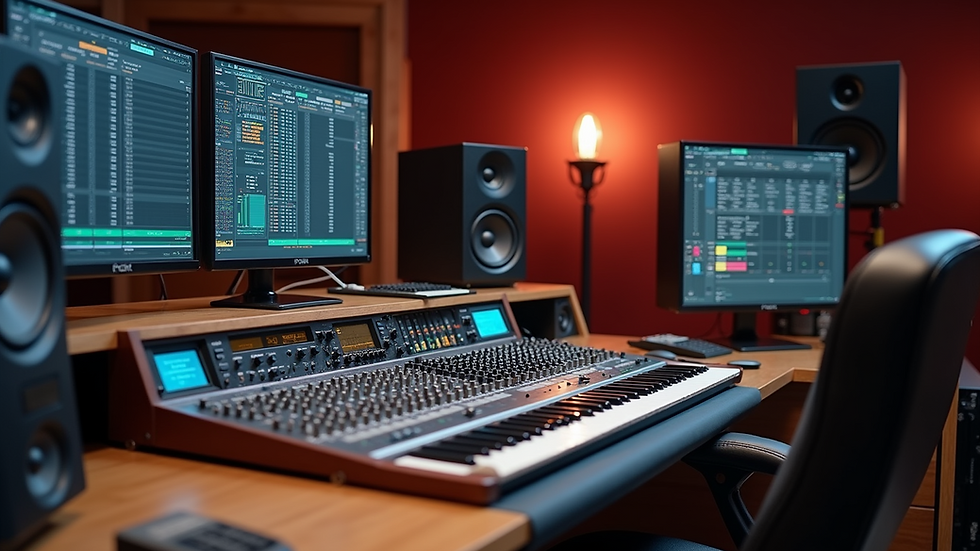
Bringing It All Together: The Balanced Mastering Mindset
Balanced audio mastering is about respect - respect for the music, the artist’s vision, and the listener’s experience. It’s a careful dance between technical precision and creative intuition. When you master with balance in mind, you’re not just polishing sound; you’re crafting an emotional journey that resonates deeply.
Remember, balance doesn’t mean boring or flat. It means every element shines in its own space, contributing to a powerful, cohesive whole. Whether you’re mastering a pop anthem, a jazz ballad, or an electronic track, this principle holds true.
By focusing on balance, you ensure your music reaches its maximum sonic impact and emotional depth across all listening platforms - from streaming services to vinyl records. That’s the hallmark of professional mastering and the promise of a truly great track.
Mastering is a craft that rewards patience and practice. Keep refining your skills, trust your ears, and never lose sight of the balance that makes music come alive.


Comments